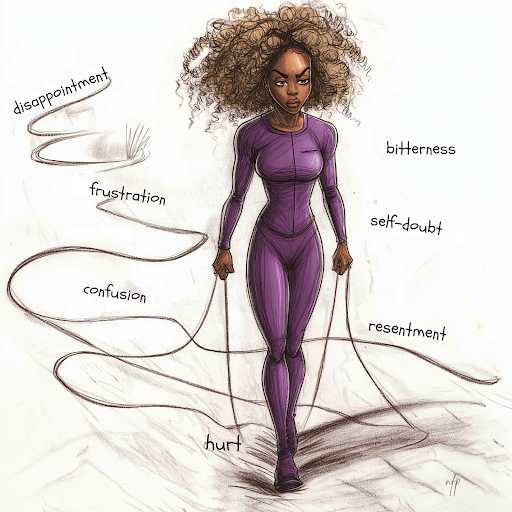
Let’s Talk About the Expectations You’re Carrying
Have you ever felt quietly disappointed in someone…
Withdrawn without explaining why…
Emotionally drained from a relationship that just feels off…
And then realized, what you expected was never actually communicated?
This week’s truth to sit with is this:
“Expectations without agreement is a setup for disappointment.”
Many of us are living under the weight of invisible contracts—emotional agreements we think others have signed, but they haven’t. Whether in friendships, marriage, family, ministry, or therapy work, so much of our emotional pain isn’t about what happened… it’s about what we assumed.
And when those assumptions are unmet, we don’t just feel let down, we question ourselves, our worth, and sometimes our relationships entirely.
What Are Expectations Doing to Your Heart
Disappointment shows up when life doesn’t match what we pictured. And often, what we pictured was never verbalized or agreed upon.
We expect others to:
- Know what we need without saying it
- Show up like we show up
- Read between the lines
- Fulfill roles they didn’t ask for
We rarely stop to ask:
- Did I ever say this out loud?
- Did they actually agree to that?
- Is this even realistic, or just familiar based on past hurt?
- Do they have the capacity to meet this expectation right now?
Unchecked expectations are often inherited from trauma, modeled in dysfunction, or shaped by past letdowns.
And they create space for silence, emotional isolation, and quiet frustration.
Three Common Expectation Traps
Here are three common ways expectations can create strain in your relationships and emotional life:
1. Assumed Expectations
You believe they should just know. You drop hints, offer clues, and expect them to interpret your feelings without words.
2. Unspoken Expectations
You hold the need tightly but never express it. You hope they will notice and meet it without asking.
3. Unrealistic Expectations
Even if they knew what you desired, what you are asking may be more than they are emotionally or practically able to give.
Each of these has one common thread. Agreement is missing. And without agreement, there can be no shared understanding; only confusion, frustration, and often distance.
None of these lead to emotional safety. All of them lead to distance, resentment, and confusion.
How to Shift from Silent Hurt to Honest Conversation
There is hope for healthier communication and emotional peace. Here are four steps to help move from assumption to agreement:
1. Speak Clearly and Courageously
Stop waiting for someone to read between the lines or hinting and start communicating.
“Let what you say be simply ‘Yes’ or ‘No.’” – Matthew 5:37 (ESV)
Say what you’re feeling. Ask for what you need. Clarity isn’t confrontation.t’s kindness.
2. Reflect on the Root of the Expectation
Take a moment to ask yourself:
- Why am I expecting this?
- Is this expectation rooted in fear, trauma, control, or a longing to feel seen and valued??
- Does this expectation reflect what I truly need, or am I hoping someone will fix a deeper wound?
“Above all else, guard your heart, for everything you do flows from it.” – Proverbs 4:23 (ESV)
An unhealed heart will often form unhealthy or unclear expectations.
3. Seek Agreement, Not Just Expression
Agreement creates connection. Assumption creates tension. Don’t just express yourself. Invite dialogue (hint: a two-way conversation). Agreement brings peace. Assumption breeds tension.
Real agreement comes when both people understand and consent to a shared expectation or responsibility. This does not always require a formal conversation, but it does require clarity and willingness.
Do two walk together, unless they have agreed to meet? – Amos 3:3 (ESV)
Agreement is the beginning of unity. Without it, we are walking in different directions while hoping for the same destination.
Ask: Can we agree on this moving forward?
4. Surrender What Others Cannot Carry
Not everyone can meet your expectations. Some do not know how. Others do not have the emotional capacity. And some are simply unaware.
This is where the healing begins. You are not meant to place the full weight of your heart in someone else’s hands. Only God can carry that.
For God alone, O my soul, wait in silence, for my hope is from Him. – Psalm 62:5 (ESV)
Let Him carry what others were never created to hold.
This is Where It Shows Up
Let’s make it real:
In Marriage:
You expect your spouse to offer emotional support at the end of a long day. They expect time to decompress. No agreement = emotional tension.
In Family:
You expect your adult child to include you more. They assume you’ll ask if you need something. Unspoken needs = silent hurt.
In Friendship:
You expect your friend to check in when you’re quiet. They think you’ll reach out if something’s wrong. The result? Distance grows.
In Ministry:
You expect others to notice your overwhelm and jump in. They expect you’ll ask for help. The silence becomes resentment.
In Work:
You expect to be seen and appreciated. They assume “you’re just doing your job.” The lack of acknowledgment begins to feel personal.
Jesus Modeled Agreement, Not Assumption
Jesus didn’t assume.
He asked questions. He clarified expectations. He communicated truth with compassion.
In Luke 9:22, He told the disciples plainly what was going to happen. He didn’t leave it up to their imagination.
Even when they misunderstood, He patiently walked with them and taught again.
Imagine if we led with the same patience, clarity, and intention.
Grow Through It: Reflect & Reset
- What silent expectations are weighing down your relationships?
- What relationships have you “cut off” due to unspoken expectations?
- What conversations need to happen this week to bring healing?
Gentle Reminder
Expectations are not wrong. But expectations without conversation, confirmation, or agreement create emotional confusion.
You can ask for what you need.
You can clarify what you expect.
And when others fall short, you can return your gaze to the One who never fails.
“Now to Him who is able to do far more abundantly than all that we ask or think…” – Ephesians 3:20 (ESV)
Let your healing begin with one honest conversation this week.
Muah!
Dr. Nanette Floyd Patterson
Oh Yeah! If you’re ready to stop being so hard on yourself and start offering yourself the same grace you offer others, grab this free resource, “7 Days of Giving Yourself Grace” devotional.
Let God meet you in the quiet places where you’re still trying to figure it all out.
Let your healing begin with one honest conversation—first with Him, then with others.